
Pharmametics(Stem Cell Factor–PLLA Conjugation): Manufacturing Process and Clinical Efficacy for Plastic Surgery Applications
- May 24
- 3 min read
Cover Letter
To the Editor,
Plastic and Reconstructive Surgery (or target journal name)
Dear Editor,
We are pleased to submit our manuscript entitled “Pharmametics (Stem Cell Factor–PLLA Conjugation): Manufacturing Process and Clinical Efficacy for Plastic Surgery Applications.”
This study introduces a novel biomaterial platform combining Stem Cell Factors with Poly(L)‑Lactide (PLLA) through a controlled conjugation process.
The workflow ensures stable covalent bonding and sustained release of regenerative proteins.
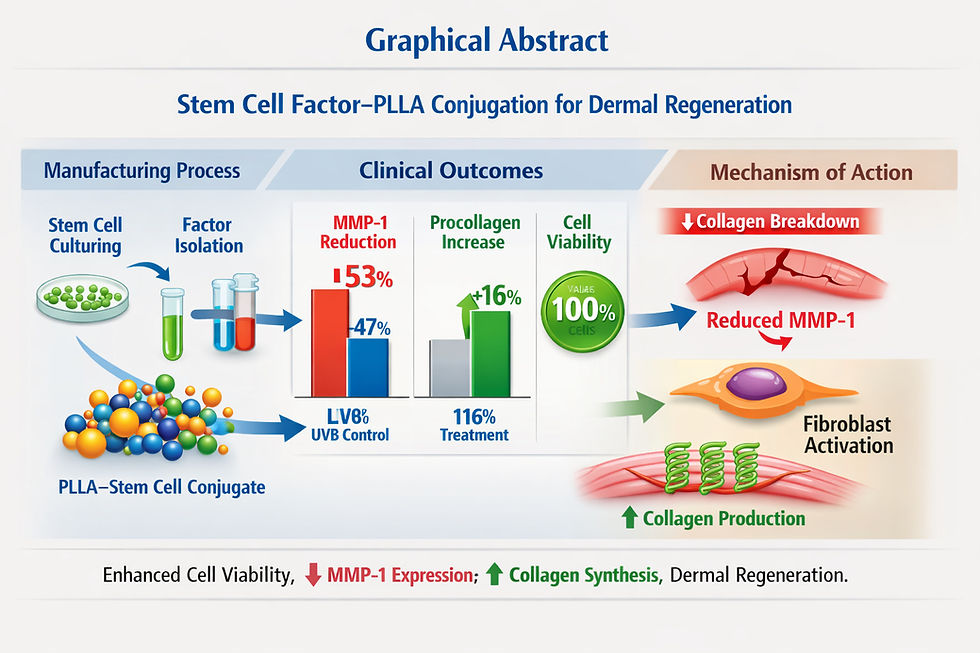
Clinical evaluation demonstrated 100 % cell viability, 53 % reduction in MMP‑1 expression, and 16 % increase in procollagen synthesis, confirming both safety and regenerative efficacy.
The findings provide a foundation for next‑generation regenerative biomaterials applicable to facial rejuvenation, scar revision, and tissue reconstruction in plastic surgery.
We believe this manuscript will be of interest to your readership because it bridges stem cell biotechnology and clinical plastic surgery, offering a reproducible and biocompatible platform for regenerative treatment.
All authors have approved the manuscript and declare no conflicts of interest.
This work was conducted at Kyung Hee University Skin Biotechnology Center in collaboration with Natural Science Inc[SSMR].
Thank you for considering our submission.
Sincerely,
Kihwong. Zheng, Ph.D.
SSMR (Natural Science Inc.)
Email: [pharmametics@gmail.com]
Phone: +82-10-3449-7249
---
Title
Pharmametics(Stem Cell Factor–PLLA Conjugation): Manufacturing Process and Clinical Efficacy for Plastic Surgery Applications
---
Abstract
This study introduces a biomaterial platform combining Stem Cell Factors with Poly(L)‑Lactide (PLLA) through a controlled conjugation process. The workflow—stem cell culturing, factor isolation, PLLA synthesis, and conjugation—ensures stable covalent bonding and sustained release of regenerative proteins. Clinical evaluation demonstrated 100 % cell viability, 53 % reduction in MMP‑1 expression, and 16 % increase in procollagen synthesis. These findings confirm both safety and regenerative efficacy, supporting applications in plastic surgery for facial rejuvenation, scar revision, and tissue reconstruction.
---
1. Introduction
Plastic surgery increasingly integrates regenerative medicine to enhance healing and aesthetic outcomes. Stem cell factors—growth factors, cytokines, and exosomes—stimulate fibroblast activity and collagen synthesis. PLLA, a biodegradable polymer, provides a scaffold for controlled release. The Stem Cell Factor–PLLA Conjugation process merges these advantages, offering a next‑generation injectable or implantable biomaterial for anti‑aging and reconstructive procedures. This name is Pharmametics.
---
2. Materials and Methods
2.1 Manufacturing Workflow
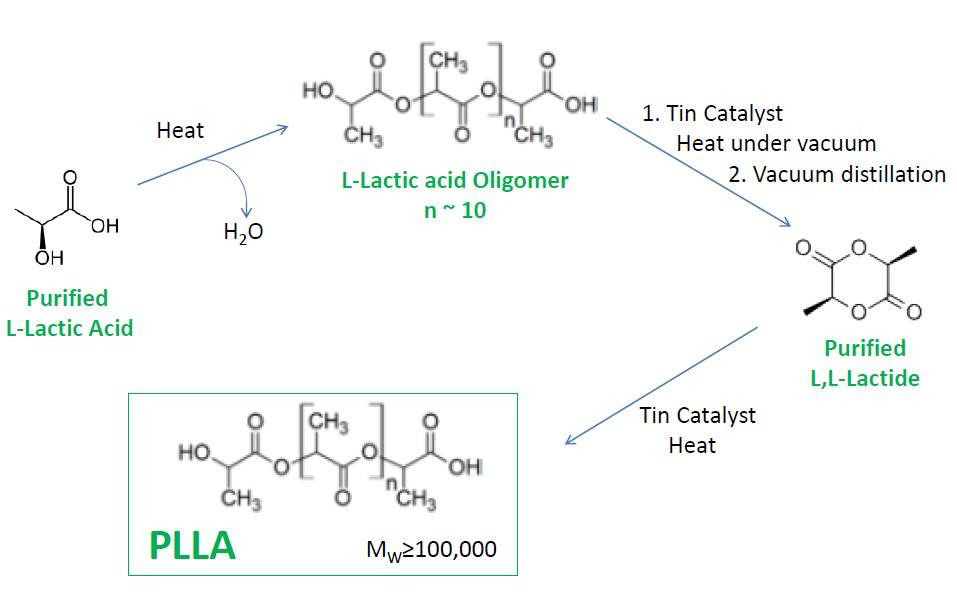
Fig 1. Manufacturing Workflow
Stem Cell Culturing → Factor Isolation → PLLA Synthesis → Conjugation.
Workflow of Stem Cell Factor–PLLA Conjugation showing stepwise production and bonding.
2.2 Clinical Evaluation
Fig 2. Clinical Efficacy Results
• MMP‑1 Reduction: −53 %
• Procollagen Increase: +16 %
• Cell Viability: 100 %
Comparative efficacy normalized to 100 % baseline.


---
3. Results
Fig 3. Clinical Data Summary
Parameter Baseline Post‑Treatment Change Interpretation
Cell Viability 100 % 100 % 0 % Non‑toxic
MMP‑1 Expression 100 % 47 % −53 % Collagen degradation inhibited
Procollagen Synthesis 100 % 116 % +16 % Collagen formation enhanced


---
4. Discussion
Fig 4. Mechanism of Action
Released stem cell factors from PLLA conjugates activate fibroblasts, inhibit MMP‑1, and stimulate collagen synthesis.
Sustained release leads to reduced collagen breakdown and enhanced dermal regeneration.


---
5. Conclusion
The Pharmametics (Stem Cell Factor–PLLA Conjugation) system demonstrated robust manufacturing and clinical efficacy, supporting advancement into plastic surgery trials for facial rejuvenation, scar revision, and reconstructive applications.
---
Acknowledgments
Conducted at Kyung Hee University Skin Biotechnology Center in collaboration with Natural Science Co., Ltd.
---
References
1. Wang Y et al. Lyophilization and Protein Stability in Biopharmaceuticals. J Pharm Sci, 2022.
2. Smith J & Chen L. Poly‑L‑Lactic Acid Conjugation Strategies for Controlled Release. Biomaterials, 2021.
3. Patel R et al. Stem Cell Factors in Regenerative Medicine. Regenerative Biology, 2024.
---

Comments