
Research Brief Report ( EVJ Submission )PLLA–Stem Cell Factor Conjugation for Equine Hoof Regeneration, Correction, and Biomechanical Enhancement
- Jan 15
- 3 min read

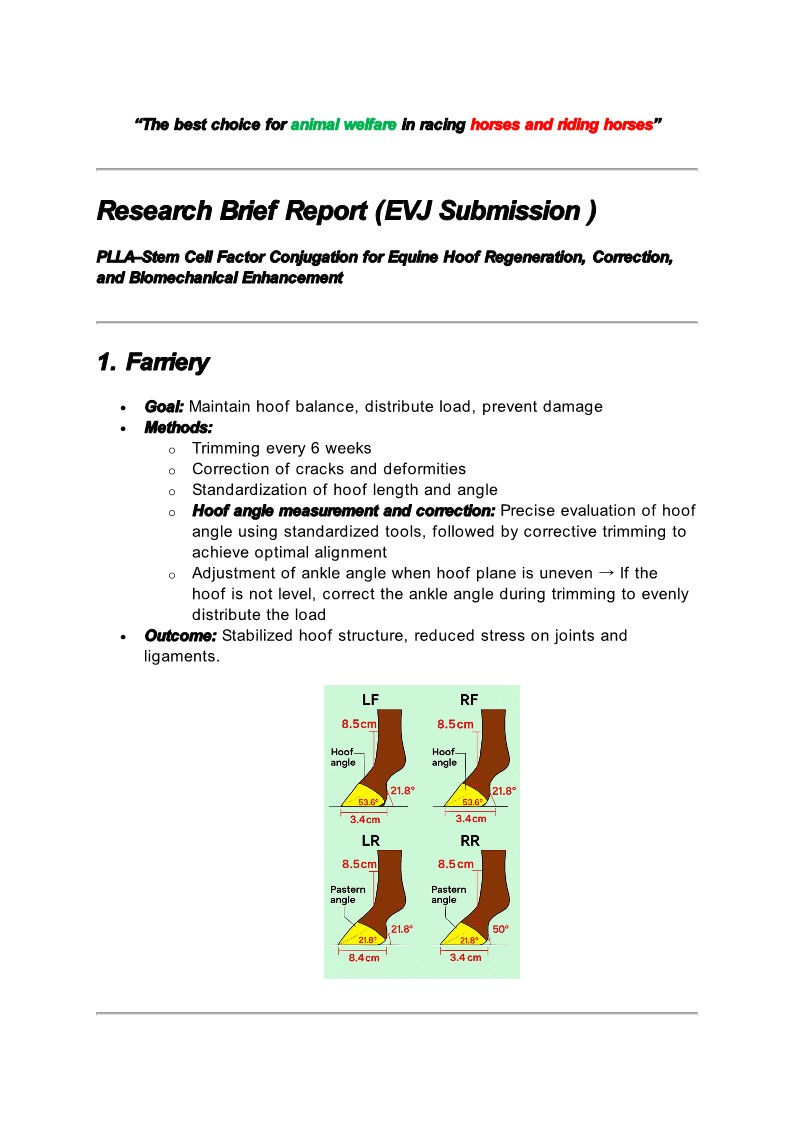


1. Farriery
Goal: Maintain hoof balance, distribute load, prevent damage
Methods:
Trimming every 6 weeks
Correction of cracks and deformities
Standardization of hoof length and angle
Hoof angle measurement and correction: Precise evaluation of hoof angle using standardized tools, followed by corrective trimming to achieve optimal alignment
Adjustment of ankle angle when hoof plane is uneven → If the hoof is not level, correct the ankle angle during trimming to evenly distribute the load
Outcome: Stabilized hoof structure, reduced stress on joints and ligaments.
2. Regeneration; Stem Cell Factor with PLLA
Goal: Restore damaged tissue, strengthen function
Methods:
PLLA + Stem Cell Factor therapy: Provides anti-inflammatory and regenerative signals while creating a supportive scaffold for cell adhesion and tissue integration
Treatment Frequency: Administered once or twice per week, depending on individual variation, to maintain continuous tissue recovery and functional reinforcement
Outcome: Promotes recovery of hoof and joint tissues, enhances long-term durability, and strengthens biomechanical resilience
3. Correction
Goal: Modify abnormal gait and load patterns
Methods:
Gua Sha: Relaxes muscles and ligaments
Corrective farriery: Redistributes hoof angle and load
Exercise program: Straight-line walking and balance training
Outcome: Improves lameness, minimizes stress on joints and ligaments, prevents re-injury
4. Stem Cell Factor Therapy
Goal: Enhance regenerative signaling and accelerate tissue repair
Composition: Stem Cell Factor combined with Hyaluronic Acid (HA) for synergistic extracellular matrix support
Treatment Schedule: Administered at 3-week intervals, with a total of 2 sessions over 6 weeks
Outcome: Stimulates angiogenesis, collagen synthesis, and cellular proliferation, leading to improved vascularization and durable hoof tissue regeneration
5. Chiropractic
Goal: Optimize musculoskeletal alignment and biomechanical efficiency
Methods:
Manual chiropractic adjustments to restore joint mobility
Correction of spinal and pelvic misalignments affecting gait
Integration with farriery and exercise programs for holistic biomechanical balance
Outcome: Enhanced locomotor function, reduced compensatory stress on joints, improved long-term performance
6. Nutrition and Feeding
Goal: Support systemic health and musculoskeletal resilience
Components:
Yeast supplementation
Probiotics (Lactic acid bacteria)
Coagulans (Bacillus coagulans)
Vitamins B,Biotin ETC.
Fresh forage (Ryegrass)
Outcome: Improved gut health, optimized nutrient absorption, strengthened immune response, and enhanced hoof and joint durability
7. Ecological and Condition Management
(Racing Horses and Riding Horses)
Goal: Maintain optimal health, performance, and longevity through environmental and physiological care
Methods:
Ecological management: Stable hygiene, ventilation, and controlled temperature to reduce stress and infection risk
Condition management: Tailored exercise programs for racehorses (speed, endurance, interval training) and riding horses (balance, posture, flexibility)
Monitoring hydration, electrolyte balance, and recovery cycles
Stress reduction strategies including pasture turnout and social interaction
Outcome: Enhanced athletic condition, reduced injury risk, improved adaptability to training loads, and sustained performance in both racing and riding contexts
Statement: The best choice for animal welfare in racehorses and riding horses.
✅ Conclusion
By integrating hoof angle measurement and correction into farriery, combining PLLA + Stem Cell Factor therapy with weekly regeneration management (1–2 sessions depending on individual needs), extending treatment with chiropractic alignment, reinforcing with nutritional supplementation, and incorporating ecological and condition management for racehorses and riding horses, the therapeutic sequence achieves a robust flow of:
Structural stability → Tissue regeneration → Functional correction → Accelerated healing → Biomechanical optimization → Systemic support → Ecological and welfare balance.
This comprehensive approach strengthens hoof durability, supports joint and cartilage health, enhances equine athletic performance, and represents the best choice for animal welfare in racehorses and riding horses.

Comments